Buy österreich.be ?
We are moving the project
österreich.be .
Are you interested in purchasing the domain
österreich.be ?
domain@kv-gmbh.de · 0541-91531010
Buy österreich.be ?
What are the environmental consequences of glacier melting in the Swiss Alps?
The melting of glaciers in the Swiss Alps has several environmental consequences. One of the most significant impacts is the loss of freshwater resources, as glaciers are a major source of water for rivers and lakes in the region. This can lead to water shortages and affect ecosystems and agriculture. Additionally, the melting of glaciers contributes to rising sea levels, which can lead to coastal erosion and the loss of habitats for marine life. The release of glacial meltwater can also lead to increased sediment and nutrient runoff, impacting water quality and aquatic ecosystems. Overall, glacier melting in the Swiss Alps has far-reaching environmental implications for both the local and global environment. **
What is the difference between melting point and melting range?
The melting point of a substance is the specific temperature at which it changes from a solid to a liquid state. It is a single, specific temperature at which the substance undergoes this phase change. On the other hand, the melting range refers to the temperature range over which a substance transitions from a solid to a liquid. It is the range of temperatures at which the substance begins to melt and continues to do so until it is completely liquid. The melting range is often used when the substance is not pure and contains impurities, causing the melting process to occur over a range of temperatures. **

Similar search terms for Melting
Top-Angebote
Products related to Melting:
-
JONAK Bottines élastiquées en cuir DanubeDétails produit • Hauteur de chaussure : 17 cm en taille 37 • Talon large • Hauteur de talon : 7,5 cm • Fermeture : A élastique • Bout amande Composition et Entretien • Dessus/Tige : 100% cuir • Doublure : 100% cuir • Semelle intérieure : 100% cuir • Semelle extérieure : 100% caoutchouc • FABRIQUÉ AU PORTUGAL.185,00 €*Shipping: 3,99 €Secure redirect to the provider

-
What is ice melting?
Ice melting is the process by which solid ice transitions into liquid water due to an increase in temperature. When ice is exposed to temperatures above its melting point of 0 degrees Celsius (32 degrees Fahrenheit), the heat energy causes the ice molecules to gain enough kinetic energy to break free from their rigid structure and form a liquid. This phase change is reversible, meaning that if the temperature drops below the freezing point, the liquid water will solidify back into ice. **
-
Why do sugars have such high melting points and caramelize before melting?
Sugars have high melting points because they form strong intermolecular bonds with each other, creating a stable crystalline structure. This makes it difficult for sugars to break apart and melt at lower temperatures. When heated further, the sugars undergo a chemical reaction called caramelization, where the sugar molecules break down and recombine to form new compounds, giving them a characteristic brown color and flavor before actually melting. This process occurs at temperatures higher than the melting point of sugar, leading to caramelization before complete melting. **
-
Why do plastics not have a melting point, but rather a melting range?
Plastics do not have a specific melting point because they are made up of a combination of different polymers and additives, each with their own melting points. This results in a range of temperatures at which the plastic will soften and eventually melt, rather than a single melting point. The melting range allows for a gradual transition from a solid to a liquid state, making it easier to process and mold the plastic into different shapes. **
-
Is Germany a melting pot?
Germany is not traditionally considered a melting pot like countries such as the United States. Germany has a strong sense of national identity and has historically been more homogeneous in terms of its population. However, in recent years, due to increased immigration and globalization, Germany's population has become more diverse, leading to more cultural exchange and integration. While Germany may not be a melting pot in the same way as some other countries, it is becoming more multicultural and diverse. **
Why isn't the solder melting?
There could be several reasons why the solder isn't melting. One possibility is that the soldering iron is not reaching a high enough temperature to melt the solder. Another reason could be that the solder is old or contaminated, which can make it more difficult to melt. Additionally, if the soldering iron tip is dirty or oxidized, it may not transfer heat effectively to the solder, preventing it from melting. **
What is the melting point?
The melting point is the temperature at which a solid substance changes into a liquid state. It is a characteristic physical property of a substance and is typically expressed in degrees Celsius or Fahrenheit. At the melting point, the substance absorbs heat energy, causing the intermolecular forces holding the solid structure together to weaken and allowing the particles to move more freely, transitioning from a solid to a liquid. **
Top-Angebote
Products related to Melting:
-
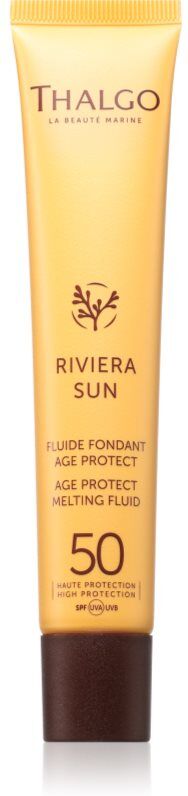
Thalgo Riviera Sun Age Protect Melting Fluid SPF50 fluide anti-rides qui prolonge le bronzage SPF 50 50 mlThalgo Riviera Sun Age Protect Melting Fluid SPF50, 50 ml, Protection contre le rayonnement solaire pour femme, Protégez votre peau du vieillissement prématuré et des autres dégradations causées par le soleil. La peau délicate du visage est beaucoup plus sensible que celle du reste du corps. En outre, elle est exposée aux rayons du soleil toute l'année. C'est pourquoi il est important de ne pas sous-estimer sa protection. Le produit de bronzage Thalgo Riviera Sun Age Protect Melting Fluid SPF50 protège efficacement la peau de votre visage contre les rayons UV et vous aide ainsi à prévenir les coups de soleil ou l'apparition de taches pigmentaires et à diminuer l'élasticité de la peau, la perte de collagène et autres signes de l’âge. Le produit : redonne de la fermeté à la peau qu’elle laisse bien tendue s’absorbe facilement réduit les rides et prévient leur apparition protège la peau contre les rayons UVA et UVB prolonge les effets du bronzage protège la peau contre le vieillissement prématuré Mode d’emploi : Appliquez sur la peau préalablement nettoyée et massez en faisant des mouvements circulaires. Appliquez sur le visage, le cou et le décolleté. Appliquez une quantité suffisante sur votre visage avant de vous exposer au soleil. Répétez selon les besoins, essentiellement après le bain, en cas de transpiration ou lorsque vous venez de sécher votre peau avec une serviette.31,90 €*Shipping: 3,45 €Secure redirect to the provider
-
Thalgo Riviera Sun Age Protect Melting Fluid SPF30 fluide anti-rides qui prolonge le bronzage SPF 30 50 mlThalgo Riviera Sun Age Protect Melting Fluid SPF30, 50 ml, Protection contre le rayonnement solaire pour femme, Protégez votre peau du vieillissement prématuré et des autres dégradations causées par le soleil. La peau délicate du visage est beaucoup plus sensible que celle du reste du corps. En outre, elle est exposée aux rayons du soleil toute l'année. C'est pourquoi il est important de ne pas sous-estimer sa protection. Le produit de bronzage Thalgo Riviera Sun Age Protect Melting Fluid SPF30 protège efficacement la peau de votre visage contre les rayons UV et vous aide ainsi à prévenir les coups de soleil ou l'apparition de taches pigmentaires et à diminuer l'élasticité de la peau, la perte de collagène et autres signes de l’âge. Le produit : redonne de la fermeté à la peau qu’elle laisse bien tendue réduit les rides et prévient leur apparition s’absorbe facilement protège la peau contre les rayons UVA et UVB protège la peau contre le vieillissement prématuré accélère le processus naturel de bronzage Mode d’emploi : Appliquez sur la peau préalablement nettoyée et massez en faisant des mouvements circulaires. Appliquez sur le visage, le cou et le décolleté. Répétez selon les besoins, essentiellement après le bain, en cas de transpiration ou lorsque vous venez de sécher votre peau avec une serviette.35,50 €*Shipping: 3,45 €Secure redirect to the provider
-
JONAK Bottines élastiquées en cuir DanubeDétails produit • Hauteur de chaussure : 17 cm en taille 37 • Talon large • Hauteur de talon : 7,5 cm • Fermeture : A élastique • Bout amande Composition et Entretien • Dessus/Tige : 100% cuir • Doublure : 100% cuir • Semelle intérieure : 100% cuir • Semelle extérieure : 100% caoutchouc • FABRIQUÉ AU PORTUGAL.185,00 €*Shipping: 3,99 €Secure redirect to the provider
-
What are the environmental consequences of glacier melting in the Swiss Alps?
The melting of glaciers in the Swiss Alps has several environmental consequences. One of the most significant impacts is the loss of freshwater resources, as glaciers are a major source of water for rivers and lakes in the region. This can lead to water shortages and affect ecosystems and agriculture. Additionally, the melting of glaciers contributes to rising sea levels, which can lead to coastal erosion and the loss of habitats for marine life. The release of glacial meltwater can also lead to increased sediment and nutrient runoff, impacting water quality and aquatic ecosystems. Overall, glacier melting in the Swiss Alps has far-reaching environmental implications for both the local and global environment. **
-
What is the difference between melting point and melting range?
The melting point of a substance is the specific temperature at which it changes from a solid to a liquid state. It is a single, specific temperature at which the substance undergoes this phase change. On the other hand, the melting range refers to the temperature range over which a substance transitions from a solid to a liquid. It is the range of temperatures at which the substance begins to melt and continues to do so until it is completely liquid. The melting range is often used when the substance is not pure and contains impurities, causing the melting process to occur over a range of temperatures. **
-
What is ice melting?
Ice melting is the process by which solid ice transitions into liquid water due to an increase in temperature. When ice is exposed to temperatures above its melting point of 0 degrees Celsius (32 degrees Fahrenheit), the heat energy causes the ice molecules to gain enough kinetic energy to break free from their rigid structure and form a liquid. This phase change is reversible, meaning that if the temperature drops below the freezing point, the liquid water will solidify back into ice. **
-
Why do sugars have such high melting points and caramelize before melting?
Sugars have high melting points because they form strong intermolecular bonds with each other, creating a stable crystalline structure. This makes it difficult for sugars to break apart and melt at lower temperatures. When heated further, the sugars undergo a chemical reaction called caramelization, where the sugar molecules break down and recombine to form new compounds, giving them a characteristic brown color and flavor before actually melting. This process occurs at temperatures higher than the melting point of sugar, leading to caramelization before complete melting. **
Similar search terms for Melting
-
Why do plastics not have a melting point, but rather a melting range?
Plastics do not have a specific melting point because they are made up of a combination of different polymers and additives, each with their own melting points. This results in a range of temperatures at which the plastic will soften and eventually melt, rather than a single melting point. The melting range allows for a gradual transition from a solid to a liquid state, making it easier to process and mold the plastic into different shapes. **
-
Is Germany a melting pot?
Germany is not traditionally considered a melting pot like countries such as the United States. Germany has a strong sense of national identity and has historically been more homogeneous in terms of its population. However, in recent years, due to increased immigration and globalization, Germany's population has become more diverse, leading to more cultural exchange and integration. While Germany may not be a melting pot in the same way as some other countries, it is becoming more multicultural and diverse. **
-
Why isn't the solder melting?
There could be several reasons why the solder isn't melting. One possibility is that the soldering iron is not reaching a high enough temperature to melt the solder. Another reason could be that the solder is old or contaminated, which can make it more difficult to melt. Additionally, if the soldering iron tip is dirty or oxidized, it may not transfer heat effectively to the solder, preventing it from melting. **
-
What is the melting point?
The melting point is the temperature at which a solid substance changes into a liquid state. It is a characteristic physical property of a substance and is typically expressed in degrees Celsius or Fahrenheit. At the melting point, the substance absorbs heat energy, causing the intermolecular forces holding the solid structure together to weaken and allowing the particles to move more freely, transitioning from a solid to a liquid. **
* All prices are inclusive of VAT and, if applicable, plus shipping costs. The offer information is based on the details provided by the respective shop and is updated through automated processes. Real-time updates do not occur, so deviations can occur in individual cases. ** Note: Parts of this content were created by AI.