Buy österreich.be ?
We are moving the project
österreich.be .
Are you interested in purchasing the domain
österreich.be ?
domain@kv-gmbh.de · 0541-91531010
Buy österreich.be ?
Cation or anion?
A cation is a positively charged ion, while an anion is a negatively charged ion. Cations are formed when an atom loses electrons, resulting in a net positive charge, while anions are formed when an atom gains electrons, resulting in a net negative charge. The charge of a cation is indicated by a superscript plus sign (+), while the charge of an anion is indicated by a superscript minus sign (-). **
What is the charge of the zinc cation?
The charge of the zinc cation is +2. This means that the zinc atom loses two electrons to form a cation with a positive charge of +2. This charge allows the zinc cation to form ionic compounds with anions that have a charge of -2, such as oxide (O2-) or sulfide (S2-). **

Similar search terms for Cation
Top-Angebote
Products related to Cation:
-
JONAK Bottines élastiquées en cuir DanubeDétails produit • Hauteur de chaussure : 17 cm en taille 37 • Talon large • Hauteur de talon : 7,5 cm • Fermeture : A élastique • Bout amande Composition et Entretien • Dessus/Tige : 100% cuir • Doublure : 100% cuir • Semelle intérieure : 100% cuir • Semelle extérieure : 100% caoutchouc • FABRIQUÉ AU PORTUGAL.185,00 €*Shipping: 3,99 €Secure redirect to the provider


-
Which cation has the noble gas configuration of helium?
The cation that has the noble gas configuration of helium is the helium cation, He+. This cation has lost one electron, leaving it with two electrons in its outer shell, which is the same configuration as helium. This gives it a stable and inert configuration similar to a noble gas. **
-
How do you distinguish a cation from an anion?
Cations are positively charged ions, while anions are negatively charged ions. Cations are formed when an atom loses one or more electrons, resulting in a net positive charge. Anions are formed when an atom gains one or more electrons, resulting in a net negative charge. One way to distinguish between cations and anions is to observe their behavior in a solution: cations are attracted to the negative electrode (cathode) in electrolysis, while anions are attracted to the positive electrode (anode). Additionally, cations are usually smaller in size than their parent atoms, while anions are larger. **
-
How is the sodium cation connected to a chloride anion?
The sodium cation is connected to a chloride anion through ionic bonding. In this type of bonding, the sodium atom loses an electron to become a positively charged cation, while the chloride atom gains an electron to become a negatively charged anion. The opposite charges of the sodium cation and chloride anion attract each other, forming a strong bond between the two ions. This ionic bond creates a stable compound known as sodium chloride, or table salt. **
-
What is the formula for an oxonium cation and hydroxide anions?
The formula for an oxonium cation is \( \text{H}_3\text{O}^+ \), which consists of a central oxygen atom bonded to three hydrogen atoms. The formula for a hydroxide anion is \( \text{OH}^- \), which consists of an oxygen atom bonded to a hydrogen atom. In aqueous solutions, oxonium cations and hydroxide anions are often involved in acid-base reactions, where oxonium cations act as acids and hydroxide anions act as bases. **
What is the difference between the nitrosyl cation and nitric oxide?
The nitrosyl cation (NO+) is a positively charged ion, while nitric oxide (NO) is a neutral molecule. The nitrosyl cation is a reactive species that can act as a strong oxidizing agent, while nitric oxide is a signaling molecule with various physiological functions in the body. Additionally, the nitrosyl cation is typically found in coordination complexes with transition metals, whereas nitric oxide is a diatomic molecule that can exist as a gas at room temperature. **
Which component of the salt, the cation or the anion, is responsible for the flame coloration?
The flame coloration is primarily caused by the cation, or the positively charged ion, in the salt. When the salt is heated in the flame, the cation absorbs energy and becomes excited, moving to a higher energy state. As the cation returns to its ground state, it releases the absorbed energy in the form of light, which is what causes the characteristic flame color. The anion, or the negatively charged ion, does not significantly contribute to the flame coloration. **
Top-Angebote
Products related to Cation:
-
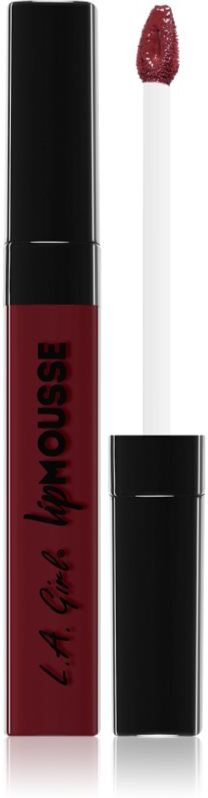
L.A. Girl Cosmetics Lip Mousse rouge à lèvres crémeux teinte Bae-Cation 6 mlL.A. Girl Cosmetics Lip Mousse, 6 ml, Rouges à lèvres pour femme, S’il y a une chose qui ne se démodera jamais, c’est bien le rouge à lèvres. Le rouge à lèvres L.A. Girl Cosmetics Lip Mousse habille vos lèvres d’une couche de couleur uniforme, intense et irrésistible pour mettre en valeur n’importe quel maquillage, que ce soit pour le travail, une réunion ou une soirée. En plus de vous permettre de souligner vos lèvres, elle vous aide à leur donner la forme que vous souhaitez et même à les rendre plus volumineuses si nécessaire. Vous obtenez en un tournemain des lèvres joliment colorées et modelées, qui attirent tous les regards. Bref, une bouche à croquer. Le produit : texture crémeuse lisse les rides et les imperfections des lèvres assure une longue tenue ne dessèche pas inutilement les lèvres donne la sensation de lèvres hydratées s’applique facilement Mode d’emploi : Appliquez le rouge à lèvres en partant du centre pour rejoindre les côtés des lèvres.5,20 €*Shipping: 3,45 €Secure redirect to the provider
-
JONAK Bottines élastiquées en cuir DanubeDétails produit • Hauteur de chaussure : 17 cm en taille 37 • Talon large • Hauteur de talon : 7,5 cm • Fermeture : A élastique • Bout amande Composition et Entretien • Dessus/Tige : 100% cuir • Doublure : 100% cuir • Semelle intérieure : 100% cuir • Semelle extérieure : 100% caoutchouc • FABRIQUÉ AU PORTUGAL.185,00 €*Shipping: 3,99 €Secure redirect to the provider
-
Cation or anion?
A cation is a positively charged ion, while an anion is a negatively charged ion. Cations are formed when an atom loses electrons, resulting in a net positive charge, while anions are formed when an atom gains electrons, resulting in a net negative charge. The charge of a cation is indicated by a superscript plus sign (+), while the charge of an anion is indicated by a superscript minus sign (-). **
-
What is the charge of the zinc cation?
The charge of the zinc cation is +2. This means that the zinc atom loses two electrons to form a cation with a positive charge of +2. This charge allows the zinc cation to form ionic compounds with anions that have a charge of -2, such as oxide (O2-) or sulfide (S2-). **
-
Which cation has the noble gas configuration of helium?
The cation that has the noble gas configuration of helium is the helium cation, He+. This cation has lost one electron, leaving it with two electrons in its outer shell, which is the same configuration as helium. This gives it a stable and inert configuration similar to a noble gas. **
-
How do you distinguish a cation from an anion?
Cations are positively charged ions, while anions are negatively charged ions. Cations are formed when an atom loses one or more electrons, resulting in a net positive charge. Anions are formed when an atom gains one or more electrons, resulting in a net negative charge. One way to distinguish between cations and anions is to observe their behavior in a solution: cations are attracted to the negative electrode (cathode) in electrolysis, while anions are attracted to the positive electrode (anode). Additionally, cations are usually smaller in size than their parent atoms, while anions are larger. **
Similar search terms for Cation
-
How is the sodium cation connected to a chloride anion?
The sodium cation is connected to a chloride anion through ionic bonding. In this type of bonding, the sodium atom loses an electron to become a positively charged cation, while the chloride atom gains an electron to become a negatively charged anion. The opposite charges of the sodium cation and chloride anion attract each other, forming a strong bond between the two ions. This ionic bond creates a stable compound known as sodium chloride, or table salt. **
-
What is the formula for an oxonium cation and hydroxide anions?
The formula for an oxonium cation is \( \text{H}_3\text{O}^+ \), which consists of a central oxygen atom bonded to three hydrogen atoms. The formula for a hydroxide anion is \( \text{OH}^- \), which consists of an oxygen atom bonded to a hydrogen atom. In aqueous solutions, oxonium cations and hydroxide anions are often involved in acid-base reactions, where oxonium cations act as acids and hydroxide anions act as bases. **
-
What is the difference between the nitrosyl cation and nitric oxide?
The nitrosyl cation (NO+) is a positively charged ion, while nitric oxide (NO) is a neutral molecule. The nitrosyl cation is a reactive species that can act as a strong oxidizing agent, while nitric oxide is a signaling molecule with various physiological functions in the body. Additionally, the nitrosyl cation is typically found in coordination complexes with transition metals, whereas nitric oxide is a diatomic molecule that can exist as a gas at room temperature. **
-
Which component of the salt, the cation or the anion, is responsible for the flame coloration?
The flame coloration is primarily caused by the cation, or the positively charged ion, in the salt. When the salt is heated in the flame, the cation absorbs energy and becomes excited, moving to a higher energy state. As the cation returns to its ground state, it releases the absorbed energy in the form of light, which is what causes the characteristic flame color. The anion, or the negatively charged ion, does not significantly contribute to the flame coloration. **
* All prices are inclusive of VAT and, if applicable, plus shipping costs. The offer information is based on the details provided by the respective shop and is updated through automated processes. Real-time updates do not occur, so deviations can occur in individual cases. ** Note: Parts of this content were created by AI.